
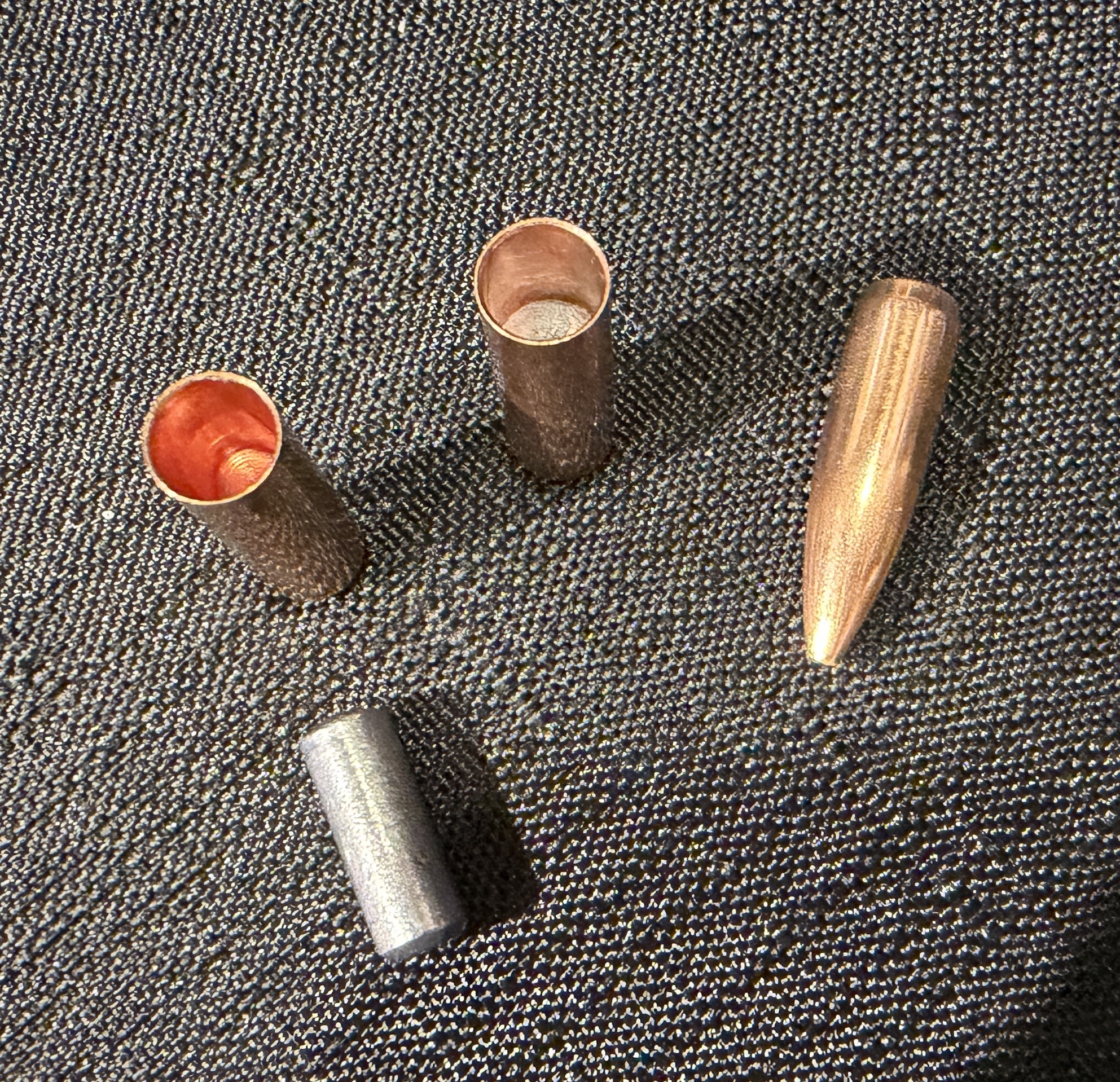
In almost every short-range benchrest club around the world, there comes a point where a new shooter notices something curious.
The rifles are custom. The actions are custom. The barrels are custom. The stocks are custom. The chambers are custom.
And increasingly, the bullets are custom too.
At first glance, this may seem unusual. After all, today’s factory bullets from companies such as Berger and Sierra are exceptionally good. Bespoke manufacturers such as Bart’s Bullets, Hottenstein, PRP Bullets and many others, produce bullets capable of winning matches at national and international level.
So why do many serious benchrest shooters eventually start making their own bullets at home?
The answer lies in the relentless pursuit of consistency.
The Pursuit of Tiny Differences
Benchrest is unique among shooting sports because success is often determined by incredibly small margins.
A tenth of an inch can separate first place from tenth place.
When competitors are shooting aggregates measured in the two’s and one’s at 100 and 200 yards, every variable becomes important.
A typical hunting rifle shooter may never notice a slight variation in bullet weight, jacket thickness, nose length or base squareness.
A benchrest shooter often does.
What appears insignificant at 300 metres on a deer may be the difference between a record group and an average group at a benchrest match.
The pursuit of accuracy is a process of eliminating variables. Brass is sorted, powder charges are refined, barrels are tuned and seating depths are adjusted. Eventually, the focus narrows to the only component that actually travels to the target:
The bullet.
Factory Bullets Are Better Than Ever
Let’s be clear.
Factory and bespoke bullet makers produce outstanding products. These manufacturers have earned excellent reputations because they understand what precision shooters require. Many club shooters and even top-level competitors achieve remarkable results with purchased bullets.
For the majority of shooters, buying bullets makes perfect sense. It saves time, equipment costs and the considerable learning curve involved in bullet making.
Yet the very best benchrest shooters are often searching for something beyond “excellent.”
They are searching for perfect.
Or at least their own definition of it.
The Ability to Tune the Bullet to the Barrel
One of the biggest advantages of a benchrest shooter making their own bullets is the ability to tailor them specifically to a rifle.
No two barrels are identical.
Even barrels made by the same manufacturer using the same reamer can display preferences for different bullet characteristics.
A bullet maker can adjust:
- Bullet weight
- Bearing surface length
- Ogive shape
- Jacket selection
- Core seating pressure
- Pointing pressure
- Meplat diameter
- Final finish
These subtle adjustments may produce only tiny differences on paper.
But in short-range benchrest, tiny differences matter.
A shooter can effectively build a bullet around a particular barrel rather than hoping a commercially available design happens to be the perfect match.
Total Control Over Quality
Many benchrest shooters eventually develop a desire to control every stage of the ammunition process.
They already:
- Turn necks
- Sort brass
- Measure powder charges precisely
- Tune seating depth
- Monitor barrel condition
Making bullets simply becomes the next logical step.
When producing bullets at home, the shooter controls:
- Jacket inspection
- Core weights
- Core seating consistency
- Final bullet weight
- Pointing operations
- Lot uniformity
If something changes in performance, they know exactly what has been done and exactly what has changed.
That level of control appeals strongly to precision-minded competitors.
Lot-to-Lot Consistency
Even the finest commercial bullets are produced in batches.
Over time, jackets may come from different lots. Dies wear slightly. Materials change.
Most shooters will never see the difference.
Benchrest shooters frequently believe they can.
By making their own bullets, they can produce several thousand projectiles from a single supply of jackets and cores, maintaining consistency throughout an entire season.
For competitors chasing aggregate records, that consistency is highly valued.
The Competitive Edge
Benchrest has always been an equipment-driven sport.
Not because competitors are trying to buy success, but because the discipline rewards precision engineering.
Most shooters who begin making bullets do not suddenly gain an extra quarter-inch of accuracy.
In fact, many shoot worse initially while learning the craft.
The advantage is usually much smaller.
Perhaps a slightly lower vertical spread.
Perhaps better performance in difficult conditions.
Perhaps one or two fewer unexplained shots during a season.
At elite levels, that may be enough.
The difference between winning a National Championship and finishing fifth is often measured in tiny fractions of an inch.
The Craftsmanship Factor
There is another reason that receives less attention.
Many shooters simply enjoy it.
Benchrest has always attracted people who enjoy precision machining, experimentation and craftsmanship.
Making bullets combines all three.
It is a hobby within a hobby.
Many bullet makers find just as much satisfaction in producing perfect projectiles as they do in shooting them.
There is a certain pride in posting a winning target and knowing not only that you chambered the round, but that you personally made the bullet as well.
Is Making Bullets Worth It?
The answer depends entirely on the shooter’s goals.
For a newer benchrest competitor, the greatest gains usually come from:
- Improving wind reading
- Refining shooting technique
- Developing loads
- Learning rifle tuning
- Practising match procedures
Custom-made bullets alone will not compensate for poor fundamentals.
However, for experienced competitors who have already optimised every other aspect of their equipment and technique, bullet making can represent the next step in the pursuit of ultimate consistency.
The Bottom Line
The reason many short-range benchrest shooters eventually make their own bullets is not because factory bullets are inadequate.
Far from it.
Bullets from respected factory and bespoke manufacturers are capable of extraordinary accuracy and have won countless matches.
Rather, the move to home bullet making reflects the mindset that defines benchrest itself: a continual search for incremental improvements.
When groups are measured in thousandths, controlling every possible variable becomes attractive.
For some shooters, that journey ends with buying excellent custom bullets.
For others, it ends at a bullet press on the workbench, producing projectiles tailored specifically to one rifle, one barrel and one goal:
To put five shots through the smallest hole possible.

Talk to the NZ Bench Rest Shooters Association today.